"CGF has shaped Swedish corporate governance and influenced the international debate"
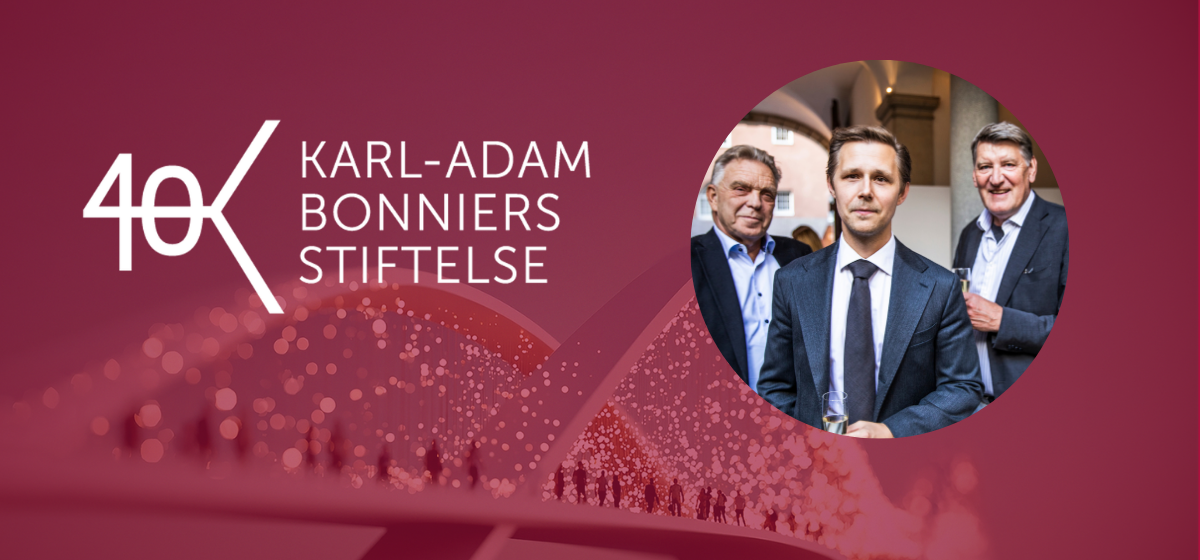
When Corporate Governance Forum (CGF) was founded in 1993, the concept of corporate governance was still in its infancy in Sweden. Three decades later, the forum has not only shaped how Swedish corporate governance is discussed, it has also influenced legislation at the national level, given Sweden a strong voice in the international debate, and informed an entire generation of decision-makers. Founders Rolf Skog and Mats Isaksson, together with current forum manager Erik Lidman, reflect on the journey and look ahead.
The background to CGF goes back to the Swedish business landscape of the 1980s, characterized by cross-ownership and a strong management-driven culture. In the midst of the debate, the Ownership Inquiry (Ägarutredningen) was launched in 1985, where Rolf Skog and Mats Isaksson spent five years mapping ownership structures and corporate governance. The work gave them an international outlook that few others in Sweden had at the time.
– We became deeply familiar with the then relatively new discussion of corporate governance, not least through our contacts in the United States. Two things we discussed early on were the market for corporate control and the growing role of institutional ownership — that is, how funds and other owners were shaping the dynamics around companies, Rolf recalls.
When the inquiry was completed, there was still no platform where these issues could be discussed on a continuous basis. The idea for a Swedish forum was reportedly sketched out on a napkin in Central Park in New York. Through Gunnar Nord and Robert Ohlsson at Företagsjuridik, the two came into contact with Karl-Adam Bonnier, who immediately saw the value of creating a platform within the framework of his foundation. CGF was born.
An arena for constructive dialogue
Since then, CGF has hosted nearly 150 seminars. Participants form a group of around a hundred people, including business leaders, major owners, lawyers, institutional investors, officials from the Government Offices, and other experts, with 50 to 60 typically attending each seminar. Many of the gatherings have an international dimension. In these meetings, something has taken place that has been difficult to achieve on other arenas.
– – The Foundation’s neutrality opens the door to discussions that would otherwise never take place. Because participants share a genuine interest in developing Swedish corporate governance, we are able to have open and constructive conversations. We do not always agree, but we have managed to shape a common way of approaching the issues, Rolf continues.
Impact on legislation and code
The fact that CGF has never had legislative influence as its stated purpose has not prevented its discussions from leaving clear traces. Both the new Companies Act of 2005 and the takeover legislation of 2006 bear the mark of the perspectives developed within the forum, including the view of strong ownership responsibility, the principle of board neutrality in takeover bids, and rules that clarify the company’s duty to create value.
– The forum has never been there explicitly to influence legislation. But these conversations have informed an entire generation of decision-makers at the Financial Supervisory Authority, at the ministries, and at law firms. Much of the experience and knowledge that exists there has, in one way or another, been shaped by the discussions in the forum, Mats explains.
One particularly clear example is the Swedish Corporate Governance Code from 2005.
– Every single person involved in developing the code belonged to the forum’s circle. The Swedish code has a very pronounced ownership perspective, unlike the codes of several other European countries. This is not something we can take credit for alone, but in important respects the forum has shaped the thinking of those who actually wrote the code, Mats continues.
From Stockholm to the international arena
CGF’s impact has not stopped at Sweden’s borders. In parallel with the forum being established, Mats Isaksson moved to Paris and soon came to lead the work on OECD’s Principles of Corporate Governance, with Rolf Skog as a member of the committee that finalized the document.
– In this way, the work within CGF came to serve as input to the development of the OECD principles, Mats says.
The principles have since been updated in four or five versions, adopted by the G20, and still constitute one of the world’s most important frameworks for corporate governance. The same has taken place within the EU, where the Swedish and Nordic perspective was long difficult to make heard, but where parts of the Commission today are receptive.
– Over the years we have argued the case again and again. That the message has gained traction depends on two things: first, that our perspective is economically sound and rational, and second, that we have been able to be personally present in these processes over a long period of time, Rolf continues.
Independence and the view ahead
That CGF has been able to preserve its distinctive character over three decades is closely tied to the Foundation’s independence, something Mats and Rolf return to as decisive.
– The Foundation is not associated with any particular interests. That has been absolutely crucial for people wanting to return to the gatherings. It is an environment where openness is welcomed, and no one is trying to advance an agenda other than knowledge-sharing and exchange of experience, Rolf says.
Asked which corporate governance question is most underestimated today, the answer becomes reflective, and points back to the foundational question already raised in the Ownership Inquiry.
– It is about the role of owners in structural transformation and business dynamics. If owners have a positive role to play in innovation and renewal, what corporate governance rules are needed to give them the conditions to play that role? That is the perennial question. Things change, and we may need to adjust the frameworks going forward, Rolf reflects.
For Erik Lidman, who today leads the forum together with Rolf and Mats, the role of active ownership is also the issue that needs the most attention, especially in an international perspective.
– In Sweden, we understand why strong owners matter. Internationally, there is still a suspicion toward controlling ownership, a notion that engaged owners benefit themselves at the expense of others. In Sweden, we see it the other way around — as a resource that helps the company move forward. That perspective is one we need to keep advocating for, Erik Lidman says.
He underlines the forum’s continued importance for making Sweden’s voice heard.
– Without CGF, there would not have been the same shared discourse. Sweden has been good at engaging internationally and explaining how our model works. In that, the forum has been an important force — and continues to serve a role going forward, Erik concludes.
The forum’s future is as much about preserving what has been built as it is about developing it further. After more than thirty years, the work of improving corporate governance is not a finished project but an ongoing endeavor, focused on keeping the shared Swedish corporate governance discourse alive in a world that is changing faster than ever.