
Decoding the Swedish Media Landscape
Sweden’s Freedom of the Press Act is among the oldest in the world and a cornerstone of the country’s democratic tradition. Even as that tradition remains strong, the media landscape is changing rapidly: new technology is reshaping how information is produced, distributed, and consumed, and the boundaries between different forms of media are increasingly blurred.
Against this backdrop, the Karl-Adam Bonnier Foundation and the Bonnier Family Foundation hosted a seminar on the role of Swedish media in society – as a watchdog of power and a platform for public debate. The seminar was arranged at the request of the Association of Diplomats Stockholm (ADS), out of a wish to better understand how the Swedish media system works. Because press freedom and information integrity are vital to a country’s democratic health, these questions are of particular relevance to those who represent their countries in Sweden.
A broad international audience
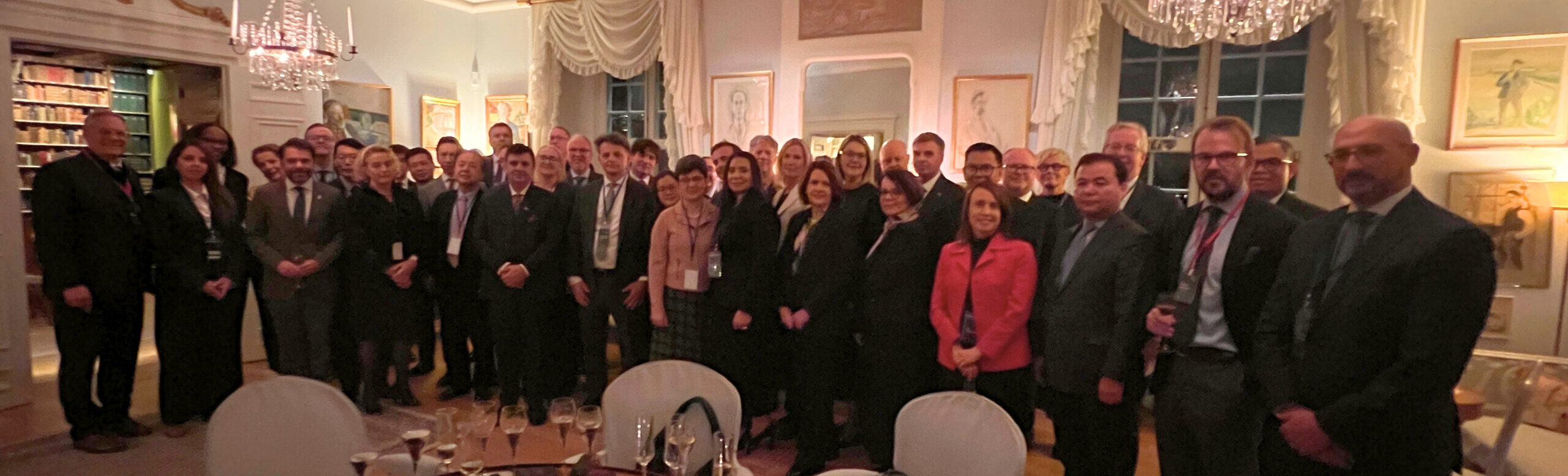
Seated around the tables were representatives from 35 countries, most of them ambassadors – countries that together account for roughly 40 percent of the world’s GDP and more than half of its population. That the question of free and independent media drew such a broad international group says something about how central the subject is. The evening took the form of a moderated dinner discussion led by Thomas Mattsson, Senior Advisor at Bonnier News and former editor-in-chief of Expressen.
Self-regulation at the core
The discussion began with Sweden’s tradition of press freedom, rooted in the Freedom of the Press Act of 1766. One of the evening’s key points was that in Sweden it is the media themselves, not the state, that regulate press ethics. Jonas Kanje, Sweden’s Media Ombudsman, described how this self-regulatory system works. Members of the public can turn to the Media Ombudsman if they feel they have been treated unfairly or unethically by the media, even when no law has been broken. The system is based on the industry’s own code of ethics, is funded by the media themselves, and dates back to 1916.
Independence, trust, and local presence
Cilla Benkö, CEO of Sveriges Radio, described Sweden’s public service mission. A key point was that Swedish public service is independent: it is neither state-owned nor politically controlled, but owned by an independent foundation and funded through a dedicated, earmarked public service fee rather than the state budget. Several guests observed that this differs markedly from the situation in many other countries – few have built public service organizations with comparable independence, role, and funding.
The high level of trust and use is reflected in the figures: around seven in ten Swedes have fairly or very high trust in public service. At the same time, Benkö highlighted the larger challenge facing the media today: the relationship between media and the global technology platforms – a theme that extended to the impact of artificial intelligence and disinformation.
Pia Rehnquist, Head of Bonnier News Local, emphasized the value of local journalism, and in particular of having journalists on the ground. As trust in large and heavily commercial media declines, local presence becomes ever more important: when you know who is writing, and can see that the newsroom is based in your community, trust in what is reported grows. Sweden is also among the countries with one of the highest shares of people who pay for online news in the world.
The evening also reminded guests of how rare press freedom is globally. According to Reporters Without Borders’ 2025 index, only around 1 percent of the world’s population lives in a country where press freedom is rated as good. This makes the Swedish system, with its independence and high public trust, the exception rather than the rule. The conversation also touched on the impact of technology, including artificial intelligence and disinformation.
Interest was considerable, and over the course of the evening guests expressed a wish to make the seminar an annual tradition and an opportunity for diplomats newly posted to Sweden to quickly gain a deeper understanding of the Swedish media landscape. The conversation was a reminder of how closely press freedom, media ethics, and public trust are intertwined, and of the value of meeting across borders to share perspectives on the questions that shape our democracies.

