
Sweden’s infrastructure and industrial policy in a new geopolitical reality
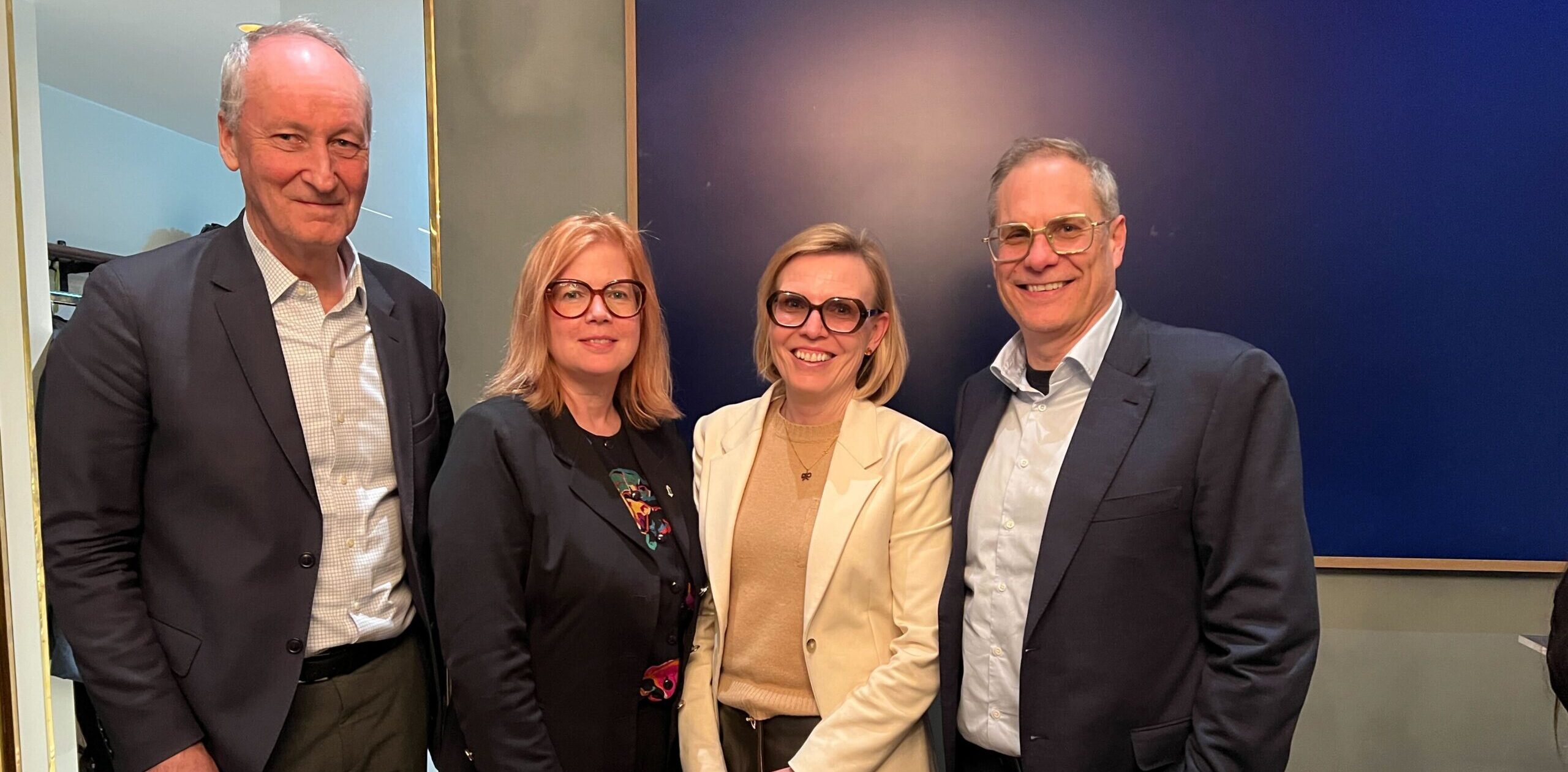
How can Sweden strengthen its competitiveness, resilience and ability to act in a time of growing geopolitical tension? That was the starting point when the Karl-Adam Bonniers Foundation brought together decision-makers from business, politics, public agencies, and academia for an in-depth dinner discussion on Swedish infrastructure and industrial policy.
The evening’s keynote speaker was Anna Starbrink, Director General of the Swedish Civil Defence and Resilience Agency, who described a rapidly changing global environment in which war, sabotage, cyber threats and disruptions to critical societal functions are placing new demands on Sweden’s resilience. Her message was clear: strong civil defense and robust infrastructure can only be built through close cooperation between public and private actors. A society capable of meeting the demands of war will also be better equipped to handle other kinds of crises.
The discussion that followed returned to several issues that are critical to Sweden’s future ability to act. Participants highlighted the need for a clearer strategic direction from the state in major infrastructure and industrial investments, not least in the energy sector, where security, preparedness and competitiveness are now closely intertwined. At the same time, it was emphasized that the state cannot carry this development alone, but must create long-term conditions, better coordination and clearer frameworks for private investment.
The conversation also underscored the importance of prioritizing investments that strengthen both defense capability and sustainable growth. Power grids, transport systems, digital infrastructure and local redundancy were identified as particularly important areas. Several participants returned to the need for faster and more solution-oriented processes, stronger governance and a greater ability to recognize the broader societal value of large strategic investments.
Another important conclusion was that long-term decision-making is not only about rules and institutions, but also about direction and confidence in the future. For major strategic choices to endure over time, a clearer narrative is needed about what Sweden wants to build, protect and develop in this new geopolitical reality.
The seminar was organized in collaboration with the House of Governance and Public Policy and the House of Innovation at the Stockholm School of Economics.